
This post was provided by News Now Warsaw
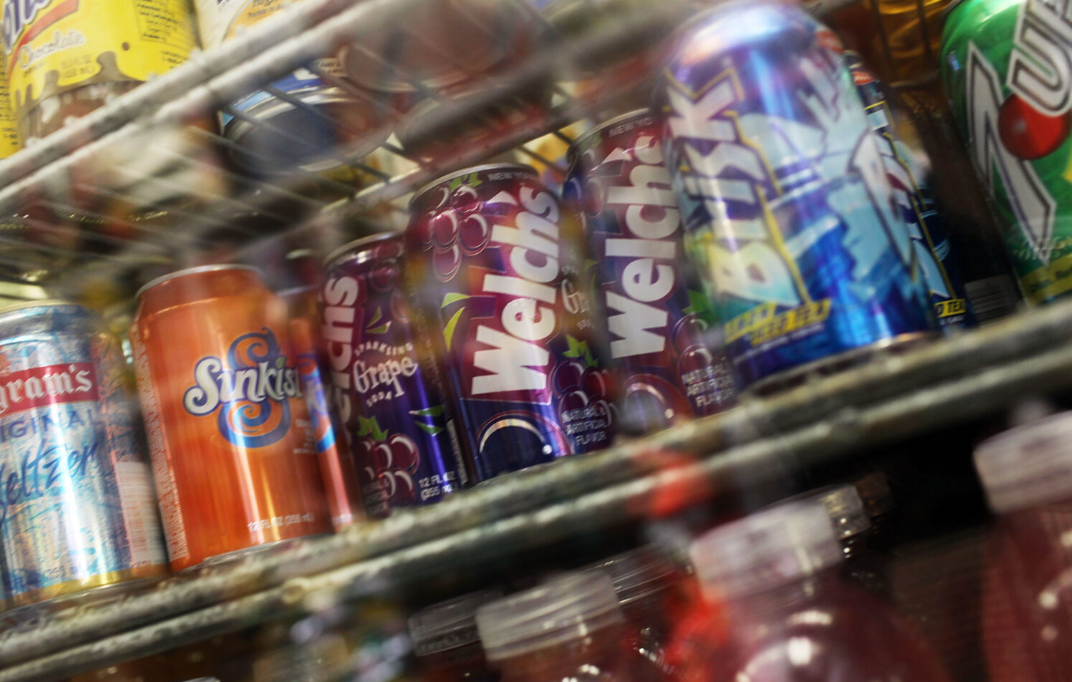
Indiana merchants and customers say the state’s ban on federal food aid for sugary drinks and candy relies on definitions too “arbitrary” to comply with or shop by.
The Supplemental Nutrition Assistance Program — the nation’s largest anti-hunger initiative — serves more than half a million low-income Indiana residents.
Since Jan. 1, Hoosier SNAP recipients have been unable to use their benefits on gum or mints, while potato chips and ice cream have remained in the clear.
Dairy is the deciding factor for sweetened coffee. Soda is never allowed. Only electrolyte mixes designed for children are O.K. “Sports” drinks don’t work, but “fitness” versions are fine.
“What’s the difference between a sports beverage and a fitness beverage? I’m telling you, they’ve got themselves all tied up,” said Rob Forsyth, who operates Illinois-based MotoMart.
The convenience store chain has 84 locations, including six in southern Indiana.
“The arbitrariness of what they’ve decided has confused us completely,” Forsyth said. “… We have no high degree of confidence that we are complying with the law.”
A grace period on enforcement ends in two weeks, on April 1.
Retailers like him also worry competitors with laxer interpretations will profit, while customers describe time-consuming visits to multiple stores for the best deals.
Marion County resident DeVonna Johnson said she’s noticed only certain brands of sugar-free sparkling water and specific flavors of no-sugar-added juices are accepted, depending on the store.
But it’s a source of hydration and enjoyment for her two special-needs children, so she’s been driving across town.
“I’m just kind of confused to what their initiative is, because if it has no sugar, then it should be fine,” Johnson said. “I don’t know. It’s weird. It’s very confusing.”
Government health kick
The changes are a piece of the “Make Indiana Healthy Again” plan launched last April by Indiana Gov. Mike Braun’s administration, with celebrity support
An executive order directed the Family and Social Services Administration, which runs SNAP in Indiana, to request federal permission for “Smart SNAP.” The U.S. Department of Agriculture offered its approval last May.
Twenty-one other states have been permitted to bar SNAP purchases of products like sugary drinks or candy.
The waivers are “part of broader State and Federal Government efforts to fight the obesity epidemic and Make America Healthy Again,” USDA Food and Nutrition Service acting Administrator Patrick Penn wrote in a “clarifications” memo dated late last year.
But the definitions “vary” by state, Penn acknowledged — “requiring close coordination” between state agencies and retailers, particularly those operating across states.
A group of SNAP recipients sued the USDA last week over its efforts to prohibit the benefits from being used to purchase certain non-nutritious items.
Five enrollees brought the lawsuit March 11 in the U.S. District Court for the District of Columbia. The recipients hail from Colorado, Iowa, Nebraska, Tennessee and West Virginia, and are challenging the waivers in those states.
In Indiana, sugary drinks are defined as non-alcoholic beverages with natural or artificial sweeteners. Concoctions with milk or milk substitutes — soy, rice and so on — don’t count, and neither do drinks exclusively sweetened with juice.
Candy, meanwhile, is defined as a preparation of sugar, honey or other sweeteners combined with chocolate, nuts, fruit or flavorings — not including products that require refrigeration.
Indiana’s waiver is in effect for two years, through 2027. The state can request three-year-long extensions for a total of up to five years, according to FSSA spokesman Marcus Barlow.
All brick-and-mortar stores within state lines are bound by the rules. Firms fulfilling online orders out of warehouses, regardless of their location, must also comply when an order is placed by a Hoosier SNAP participant.
Retailers make decisions
MotoMart’s compliance strategy is to lean on software capable of disallowing products by category at checkout. But there’s the possibility that items outside those categories are also ineligible.
Forsyth wants a state list with the universal price codes for restricted products, which he’d load into MotoMart’s system. FSSA is “not providing a list of all excluded items,” according to an FAQ section on its Smart SNAP webpage.
Instead, the agency has listed 35 “commonly questioned items” for “general guidance purposes only.”
At JJ’s Convenience Stores, the strategy is per item — and manual.
“We can’t afford a fancy software,” said Megan Reckelhoff, CEO of the northeast Indiana chain. She and her brother, JJ’s President Nick Crump, are the fourth generation to run it.
The company has eight locations and is building a ninth.
“I don’t have an HR department. I don’t have a marketing department. I don’t have an operations department. It’s us,” Reckelhoff said. “It’s literally me and my brother and my price book manager reading labels, … trying to decide.”
Financial Controller Dave Crump, the price book manager, inputs the codes into his computer one by one.
He has to “type in the UPC, wait for it to pull up, click or unclick the SNAP box,” Reckelhoff described. “… I mean, it’s just so cumbersome, and it changes all the time.”
Barlow, the FSSA spokesman, noted participation in agency “office hours” has “recently dropped to zero, which we view as a positive indicator that retailers are getting the information they need.” He also cited “encouraging feedback” in FAQs.
Although both MotoMart and JJ’s leaders expressed uncertainty that they’re in compliance with the rules, both companies have signed and submitted self-attestation forms.
FSSA will report any retailers who haven’t filed — the extent of the agency’s role in enforcement, according to Barlow.
Once the 90-day grace period ends, SNAP merchants will be subject to federal investigation. USDA will send warning letters for first offenses. Second offenses will cost retailers their SNAP authorizations, although they can apply for reinstatement.
Losing SNAP could be costly.
At MotoMart, for instance, SNAP buys were almost 17% of in-store purchases besides fuel. That’s still less than before the ban took effect. SNAP was 25% of the total from October through December last year, according to Forsyth.
He and JJ’s leaders feared losing to laxer interpretations, too.
“We didn’t make the rules. We just have to follow them, but it’s hard to know how to follow them,” Reckelhoff said. “Especially if my competitor down the street is interpreting it differently.”
Customers feel the crunch
Johnson, the Marion County mother, is balancing rising electric bills and gasoline prices with her hunt for the familiar products her children reliably consume.
One child “really loves” the apple flavor from Honest Kids, a brand of naturally sweetened juice drinks. She hasn’t been able to find it covered by SNAP at Walmart, but has at some Kroger locations.
“It’s not covered at certain stores, even though it’s literally watered-down juice, which is crazy,” Johnson said. “You have to pick and find, like, the stores that will cover stuff, and sometimes it’s not close by. You might as well pay for it at that point, because you have to use the gas to get there.”
Grocery shopping was “way less stressful” before the restrictions took effect, she said. Now, “there’s more time that I have to find out of the day” in between her children’s naps, appointments, therapies and so on.
Johnson said her family already eats “pretty healthy” — rattling off a recent order of avocados, cucumbers, chicken, cheese, water and more — but mourned the flexibility to buy the children treats for holidays and special occasions.
Asked if she felt the restrictions were prompting healthier choices, she replied, “Has it helped us for the positive? I wouldn’t say so at all.”
“If anything, it’s made it more of a pain, because, you know, with having autistic children, they like very specific things,” Johnson continued. “… Having that taken away, even though it may seem super silly to someone else, it’s a pretty big deal for somebody that doesn’t … function in the world the same way.”
SNAP pressures intensify
Although the limits are currently on a five-year clock, Indiana lawmakers in March codified them into law.
Senate Enrolled Act 1 also ends expanded eligibility for SNAP, returning to the federal government’s lower income and asset caps. The law additionally requires that beneficiaries be U.S. citizens, permanent residents or similar.
SNAP enrollees already can’t purchase hot or prepared foods, alcoholic beverages, or tobacco under federal rules. House Bill 1263 would’ve offered one expansion: allowing the purchase of hot, prepared chicken, as long as it wasn’t fried or breaded. But it — and proposed limits on desserts — never moved forward.
Other SNAP changes are coming out of Washington, D.C.
New work requirements for able-bodied adults without dependents have taken effect. USDA is finalizing regulations detailing the variety of products SNAP retailers must stock.
The Indiana Food and Fuel Association — of which MotoMart and JJ’s are members — argued the rules would force small stores to “waste” shelf and cooler space on products customers don’t buy. In comments submitted to the USDA, the group also wrote that subcategories for bread and breakfast foods treat different products as the same, complicating compliance.
“Should this rule be finalized, it is very likely that many of our members would be forced to end their participation” in SNAP, the association added.
But the sugary drink and candy restrictions are already driving some members to think about it.
“My brother and I have had many conversations,” Reckelhoff said. “We are definitely, seriously considering whether we’ll be able to continue to serve SNAP or not.”
Forsyth called Smart SNAP implementation a “big burden” for his 84-store chain, let alone JJ’s six.
“It is so difficult to run a business these days, when you have bureaucrats that don’t have any idea how to run a store or a chain of stores,” he added. “And they’re making all these shots, and none of them are reasonable.”
About 5,000 Indiana retailers participate in SNAP, according to an analysis of 2019 USDA data by the left-leaning, D.C.-based Center on Budget and Policy Priorities.
The charitable sector is worried some will call it quits.
“Every little bit and piece that has changed in SNAP, it impacts the food banks tremendously,” said Emily Weikert Bryant, the executive director of Feeding Indiana’s Hungry. For every one meal provided by her group and other Feeding America affiliates, SNAP provides nine, she noted.
“The charitable sector is not designed, nor is it intended, to fill the large gaps that we will begin seeing in different places — just because of all the changes between the One Big Beautiful Bill (Act) and Senate (Enrolled Act) 1,” Bryant said. “And I think the Smart SNAP piece just continues to exacerbate it.”